


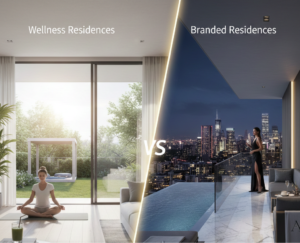
Luxury living in India is evolving fast. Today, buyers are no longer impressed by marble floors alone they want homes that actually make life better. This has sparked a growing debate:
Wellness Residences vs Branded Residences — which truly improves your quality of life?
With trending projects like Elie Saab Residences by M3M and Jacob & Co. Residences by M3M, branded homes are in the spotlight. But beyond logos and luxury names, what really impacts your daily life—your sleep, stress levels, air quality, and routines?
Let’s strip away the branding and look at real, everyday outcomes.
What Are Wellness Residences? (In Simple Terms)
Wellness residences are designed around how you live every single day. They focus on health, comfort, and long-term wellbeing rather than just visual appeal.
Typical wellness-focused features include:
- Clean, filtered indoor air
- Natural light and ventilation
- Quiet zones and soundproofing
- Green landscapes and walking paths
- Meditation, yoga, and fitness spaces
- Designs that encourage healthier daily routines
The goal is simple: help residents feel better physically and mentally, without effort.
What Are Branded Residences?
Branded residences are luxury homes partnered with global fashion, watch, or lifestyle brands. They offer:
- Prestige and status
- Designer interiors and finishes
- High-end amenities and concierge services
- Strong brand recall and resale appeal
Projects like Elie Saab Residences by M3M and Jacob & Co. Residences by M3M fall into this category. They’re visually striking and aspirational—but branding alone doesn’t always translate into better everyday living.

What Really Defines Quality of Life at Home?
When you live in a home every day, what matters most isn’t the logo at the entrance—it’s how you feel inside it.
Key daily-life indicators:
- Sleep quality
- Stress levels
- Indoor air quality
- Noise and privacy
- Ease of healthy routines
- Connection with nature and community
Let’s compare how wellness residences and branded residences perform in real life.
Sleep: The Most Underrated Luxury
Good sleep improves mood, immunity, focus, and overall happiness.
Wellness residences support better sleep through:
- Noise-reducing layouts
- Bedrooms designed for airflow
- Lighting that aligns with natural day-night cycles
Branded residences often focus on plush bedrooms and aesthetics, but unless sleep science is part of the design, better sleep isn’t guaranteed.
Air Quality: You Breathe It Every Day
Indoor air quality directly affects your energy, headaches, allergies, and long-term health.
Wellness-driven homes often include:
- Advanced air filtration systems
- Low-toxin construction materials
- Better ventilation and airflow
Luxury interiors look beautiful—but without proper air systems, they may trap pollutants.
Stress Levels: Design Can Calm or Overwhelm
Your home should help you unwind not overstimulate you.
Wellness residences reduce stress with:
- Green views and landscaped spaces
- Quiet meditation areas
- Less visual clutter and calmer layouts
Branded residences often prioritize bold design and social spaces, which may feel impressive—but not always calming after a long day.
Daily Routines: Where Wellness Really Shows
True quality of life is built through routines.
Wellness-oriented homes subtly encourage:
- Walking instead of elevators
- Morning sunlight exposure
- Easy access to fitness and relaxation spaces
- Community activities focused on health
Branded residences excel in convenience and service, but they don’t always shape healthier habits unless wellness is intentionally designed in.
Quick Comparison: Wellness vs Branded Residences
| Feature | Wellness Residences | Branded Residences |
|---|---|---|
| Sleep quality | Designed for rest | Depends on layout |
| Air quality | High priority | Optional |
| Stress reduction | Core focus | Not always |
| Daily routines | Encouraged naturally | Lifestyle-driven |
| Status appeal | Moderate | Very high |
| Long-term wellbeing | Strong | Varies |
Trending Branded Residences in India
India’s luxury real estate market is seeing a surge in branded homes, including:
- Elie Saab Residences by M3M
- Jacob & Co. Residences by M3M
- Other designer-led and international brand collaborations
These projects offer prestige and premium living—but buyers should look beyond branding to understand how these homes support everyday life.
So, Which One Truly Improves Quality of Life?
If your priority is:
- Better sleep
- Lower stress
- Cleaner air
- Healthier routines
- Long-term wellbeing
Then wellness-focused design matters more than branding alone.
The best homes today are those that combine luxury with livability—where design, environment, and daily habits work together.
Frequently Asked Questions
Wellness residences are designed to improve health, sleep, air quality, and daily routines.
Branded residences focus on luxury branding, design aesthetics, and prestige.
The key difference is that wellness residences prioritize daily wellbeing outcomes, while branded residences prioritize status and lifestyle appeal.
For long-term quality of life, wellness residences are generally better because they support better sleep, lower stress, cleaner air, and healthier routines.
Branded residences may feel luxurious but do not always improve daily physical or mental wellbeing unless wellness features are intentionally included.
Yes, wellness residences are often worth the investment because they:
Improve everyday comfort and health
Reduce long-term stress and lifestyle-related issues
Appeal to future buyers who value healthy living
As awareness of wellbeing grows, homes with wellness features are expected to maintain strong demand.